ॐ How to read the deck
Hinduism has no founder, no creed, no council and no pope — the dossier's first fact, and the reason this
deck looks the way it does. The nearest thing to thrones are the Shankaracharya seats, and there are only a
handful of them; they command enormous respect and bind almost nobody. So the deck is short — twenty-three,
not fifty-two — and its centre of gravity has moved: read the ♦ suit knowing that the Indian state today shapes
Hindu religious life more than any seer does, which is exactly the Hindutva argument of Dossier XI Field E.
Rank is the weight of the office, not the worth of the person.
♠ Spades — The Seats. The Shankaracharya peethams. Few, ancient, non-binding.
♦ Diamonds — The State. Hindutva in office. Where the real leverage now sits.
♥ Hearts — The Guru Empires. Mass movements built around a living teacher.
♣ Clubs — The Voices. Who gets to explain Hinduism — and the fight over that.
✓ All 23 verified online as living and in office on 2026-07-25, with four more added and checked on 2026-07-26: the Akhara Parishad, a new Mahamandaleshwar, the RSS general secretary, and the Tirumala board.★The check also produced this deck's most instructive result — a name it made me CUT.Champat Rai, general secretary of the Ram Janmabhoomi Teerth Kshetra Trust and one of the most powerful men
in Hindu India, resigned amid a donation-misappropriation probe; the VHP publicly distanced itself on 30 June
2026 and he left its international presidency on 6 July 2026 — three weeks before this build. A deck of the
living would have kept him. A deck of the living in power cannot.Re-verify every name at every audit.
Four cardinal seats, plus Kanchi. Tradition holds that Adi Shankara founded monastic seats at
the four corners of India — Shringeri in the south, Puri in the east, Dwarka in the west, Jyotirmath in the north —
with Kanchi claiming a fifth. Do not read them as a papacy. They speak with great authority and no jurisdiction;
most Hindus will never take an instruction from one. Two of the four turned over after Swaroopanand Saraswati died
in 2022, which is why a deck built from memory would misname the west and the north.
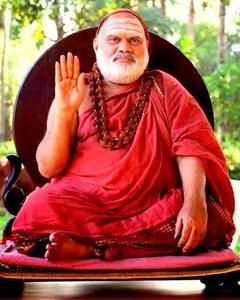
36th Jagadguru · Shringeri Sharada Peetham · South
Head of the southern seat, widely regarded as the most scholarly and least political of the peethams — the one that has kept furthest from the Hindutva project while retaining the deepest traditional authority in Advaita learning. Verified 07-25
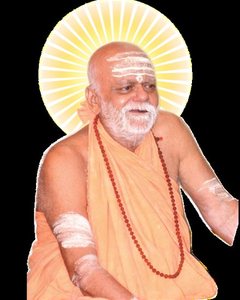
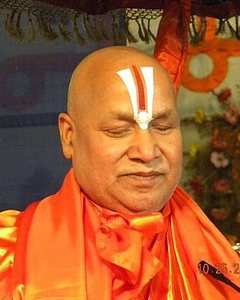
145th Shankaracharya · Govardhan Peetham, Puri · East
On the eastern seat since 9 February 1992 — the longest reign among the four, and the most outspoken. Appeared at the Kumbh in January 2026. Known for a mathematician's mind and for publicly contradicting the government when he judges it necessary. Verified 07-25
Took the western seat in 2022 , succeeding Swaroopanand Saraswati, who had held both Dwarka and Jyotirmath. Also present at the Kumbh in January 2026 — one of the two names a from-memory deck would have got wrong. ★ New since 2022
Holder of the northern seat since the 2022 succession, and the most politically combative of the four — a persistent public critic of the government from within Hindu tradition itself. Proof that "Hindu leader" and "Hindutva" are not the same word. ★ New since 2022 ⚠︎ Re-checked 2026-10-11: His title is contested. The Supreme Court stayed his coronation in October 2022, and in January 2026 the Prayagraj Magh Mela authority served notice that he is not recognised as Shankaracharya. On 21–22 February 2026 a Prayagraj POCSO court ordered an FIR against him and a disciple over alleged abuse of minors; he denies it, and the Allahabad High Court stayed his arrest. These are allegations, not findings.
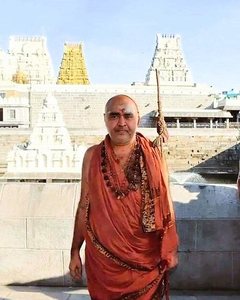
Head of the Kanchi seat since the death of Jayendra Saraswati in February 2018. Kanchi's claim to be a fifth Shankaracharya seat is disputed by the other four — a jurisdictional argument that has run for a century and shows how little central authority exists here.
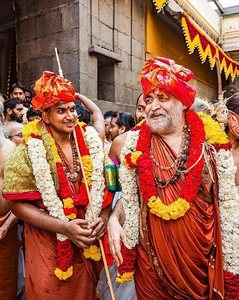
A Rig Vedic scholar from Annavaram in Andhra Pradesh, given sannyasa diksha by Vijayendra Saraswati on 30 April 2025 and named the 71st in the Kanchi line . The freshest card in the suit — succession here is chosen by the incumbent, not elected. ★ New since 2025
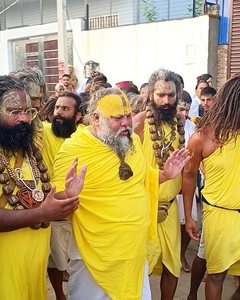
Heads the umbrella body of the thirteen akharas — the militant-ascetic orders that supply the Kumbh Mela its authority and its crowds. Where the Shankaracharyas hold prestige, the Akhara Parishad holds numbers , and at a Kumbh it is the akharas that decide the order of the bathing. Verified 07-26
The Panchdashnam Juna Akhara — the largest of the thirteen — conferred the rank of Mahamandaleshwar on her on 22 July 2026 , four days before this card was written. A woman raised to senior office in the most formidable of the ascetic orders , in a tradition where the seats above her in this suit have never had one. ★ Verified 07-26 · four days old
Jagadguru Ramanandacharya · Tulsi Peeth · born 1950
Blind since two months old, master of 22 languages , over 100 works composed without ever reading or writing — Padma Vibhushan and Jnanpith laureate , founder-president of Tulsi Peeth (1987), and one of four holders of the Jagadguru Ramanandacharya title. His testimony on Tulsidas entered the Ayodhya evidence record itself . Listed to speak at the World Spirituality Summit 2026. Verified 07-27
♦The StateHindutva in office · where the real leverage now sits · 7 cards
★Read this suit against Dossier XI Field E: Hindutva is not Hinduism. It is a political programme
founded by Savarkar in 1923, and several of the ♠ seers above openly oppose it. But it holds the levers — and the
consequences are measurable: India stands 12th on the Open Doors watch list, up from 31st in 2013; state
anti-conversion laws carry seven- to ten-year sentences, and Chhattisgarh's exempts conversion to Hinduism
by name. Naming this honestly is not anti-Hindu. Several Shankaracharyas name it too.
A♦NM
Narendra Modi
Prime Minister of India · third term
Sworn in for a third term on 9 June 2024 and still in office through July 2026. No individual in modern history has held more power over the daily religious life of more Hindus — and he consecrated the Ayodhya temple himself, an act of priestly rather than political office. Verified 07-25
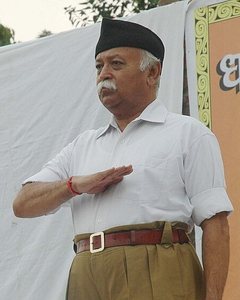
Head of the organisation the governing party grew out of — arguably the most powerful unelected man in India. Turned 75 in September 2025 , setting off a succession storm, then flatly denied he had ever advocated retiring at 75: "ready to work as long as Sangh wants." ★ Verified still in post
The government's chief operator and the man whose ministry oversees internal security, citizenship and the machinery that state anti-conversion laws run through. Still coordinating with state leadership in July 2026 . Verified 07-25
★ The fusion in a single man , and the card to study: he is simultaneously the elected head of a state of 240 million and the mahant of the Gorakhnath Math , a monastic seat he inherited. Robes and office at once — the very thing Dossier XI warns about. Verified 07-25
Heads the VHP, the RSS's religious arm and the organisation that drove the Ayodhya campaign for decades. In June 2026 he publicly distanced the VHP from Champat Rai over the Ram temple donation probe — a rare instance of the movement disowning one of its own. ★ Verified 07-25
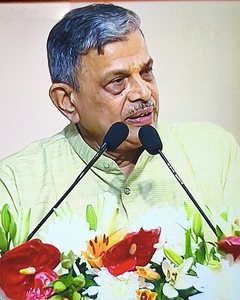
The RSS's number two and its chief executive, in post since 2021 and re-elected for a 2024–2027 term . A postgraduate in English literature from Karnataka. Bhagwat is the movement's conscience; Hosabale runs the machine — and that machine is what puts and keeps the other cards in this suit in office. Verified 07-26
Chairman of the board that runs Tirumala — by most measures the richest temple institution on earth . The point of this card is the structure, not the man: the TTD board is appointed by the government of Andhra Pradesh , so India's greatest concentration of religious wealth is administered by a political appointee rather than a priest. Verified 07-26
♥The Guru Empiresmass movements built around a living teacher · 9 cards
This is where Hinduism actually reaches people — not through the seats, but through a living
teacher with a following, an institution and often a global brand. Note the range: a yoga-and-consumer-goods empire,
a hugging saint, a temple-building order, and a Vrindavan ascetic who refuses publicity and is therefore everywhere.
For the house's project the relevant point is Field C's: in this tradition, presence can be installed —
in an image, and by extension in a person. The guru is not a pastor. He is treated as a vessel.
A♥SJ
Sadhguru (Jaggi Vasudev)
Isha Foundation · born 1957
The most globally visible Hindu teacher alive — yogi, TED-circuit mystic and campaigner, with ecological drives ( Rally for Rivers , Save Soil ) that put him beside heads of state. Reaches secular Western audiences that no Shankaracharya ever will. Verified 07-25
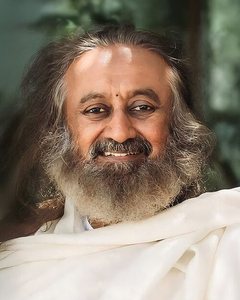
Built a worldwide organisation on breathing technique and stress relief, taught in scores of countries. Read him next to the Secular Age deck's ♥ suit: he reached the therapeutic market decades before the podcasters, and from inside a religious tradition.
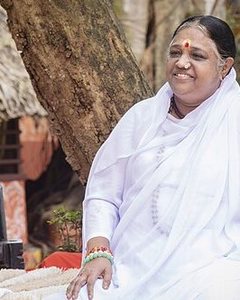
Has given darshan — an embrace — to more than 40 million people , and runs hospitals, universities and disaster relief on the proceeds. Her organisation was touring the United States in July–August 2026 . A woman at the top of a tradition that rarely puts one there. Verified 07-25
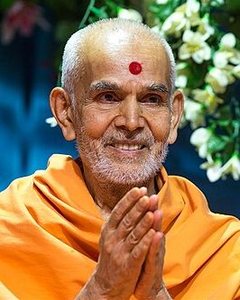
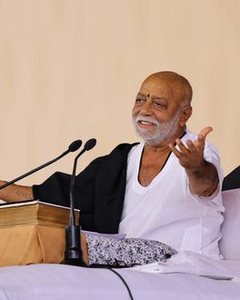
J♥Photo: - Copyright held by BAPS Swaminarayan Sanstha (web: www.baps.org, email: info@baps.org) · CC BY-SA 4.0 · credit
Mahant Swami Maharaj
guru & president, BAPS Swaminarayan · born 1933
Age 92 and head of the order that builds the Akshardham temples — the most formidable temple-construction and volunteer machine in modern Hinduism, from New Delhi to New Jersey. Succession here is by designation from the living guru, as in the Kanchi seat. Verified 07-25
★ The strangest power on the board. An ascetic at Shri Hit Radha Keli Kunj who shuns publicity and refuses to treat celebrity devotees differently — and has become one of India's largest spiritual presences because of it. The refusal of fame as the engine of fame. Verified 07-25
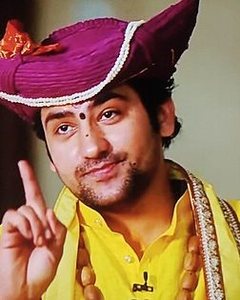
The young preacher of the Ramcharitmanas whose vast open-air courts draw enormous crowds, and who led the Sanatan Hindu Ekta Padyatra from Delhi to Vrindavan. Openly political where the seats are cautious — the populist edge of the tradition.
The pre-eminent living exponent of Ram Katha — nine-day tellings of the Ramayana he has given for six decades, from Kailash to a katha camp at the Prayagraj Mahakumbh . No ashram empire, no product line: the power is the telling itself , and a 2026 katha calendar that still fills grounds on several continents. Verified 07-27
Head of one of Rishikesh's largest ashrams on the Ganga, co-founder of the Global Interfaith WASH Alliance — the guru as environmental statesman, hosting world figures at the evening Ganga aarti and speaking at the World Spirituality Summit 2026. Verified 07-27
Took mass-market yoga and turned it into a consumer-goods conglomerate selling everything from toothpaste to ghee, with a political alignment to match. The clearest case in the hall of devotion converted directly into market share.
♣The Voiceswho gets to explain Hinduism — and the fight over that · 5 cards
⚠︎︎This suit is a battlefield, and you should know that before you cite anyone in it. Western
academic Hinduism and Hindu-diaspora intellectuals are in open conflict over who has the right to interpret the
tradition — Rajiv Malhotra's Ten Heads of Ravana names ten scholars, including Doniger and Pattanaik, as
"Hinduphobic." Take the charge seriously without accepting it wholesale: outsiders have misread this
tradition badly, and "only insiders may interpret us" is a rule that would silence half this hall.
We would want the same charity extended to us.
A♣GF
Gavin Flood
Oxford · Academic Director, Oxford Centre for Hindu Studies
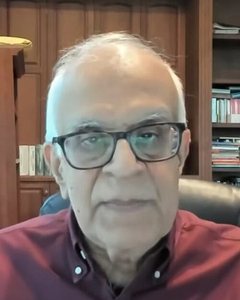
Professor of Hindu Studies and Comparative Religion at Oxford, Fellow of the British Academy, and general editor of The Oxford History of Hinduism . The most reliable single starting point in English — a specialist in Shaivism who writes without an axe. Verified 07-25 ⚠︎ Re-checked 2026-10-11: He is no longer Academic Director of the Oxford Centre for Hindu Studies. He held that post from October 2005 to December 2015, then moved to Yale-NUS in Singapore, and is now a senior research fellow at Campion Hall, Oxford. The OCHS people page, as fetched today, does not list him.
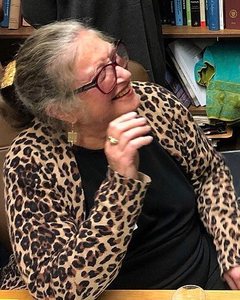
Professor of comparative religion and Indian studies at Harvard; author of Banaras: City of Light and India: A Sacred Geography . Her Darshan is the book to read before Field C — it is about what it means to see and be seen by an image. Verified 07-25 ⚠︎ Re-checked 2026-10-11: She retired from teaching in 2024 and is now Professor Emerita at Harvard. Her current role at the Pluralism Project was not confirmed (pluralism.org refused the request).
For decades the most prominent Western academic reader of Hindu texts, and the most fiercely opposed — one of her books was withdrawn in India after legal pressure. Read her and read her critics; do not cite her to a Hindu without knowing what the name carries.
Leads the intellectual push to wrest interpretation of Hinduism back from Western academia; his group published Ten Heads of Ravana: A Critique of Hinduphobic Scholars . Whatever one makes of the polemic, the underlying complaint — being explained by outsiders — is one Christians should recognise instantly.
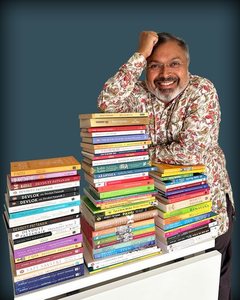
Has done more than anyone to put Hindu narrative into ordinary Indian hands — and is attacked from the Hindutva side for it, appearing on Malhotra's list. A useful reminder that in this tradition the fight over meaning is domestic, not just East-versus-West.
Figures Deck · companion to Dossier XI · Hinduism · LAMPSTAND 7
Thirty names for a billion people — nine seats that bind nobody, seven officeholders who bind everybody, nine guru empires and a battlefield of interpreters. Still short of fifty-two and still growing.
Every card verified living and in power 2026-07-25; the rule cut Champat Rai, whose power ended three weeks ago. ॐ The seats are old · the state is new ॐ