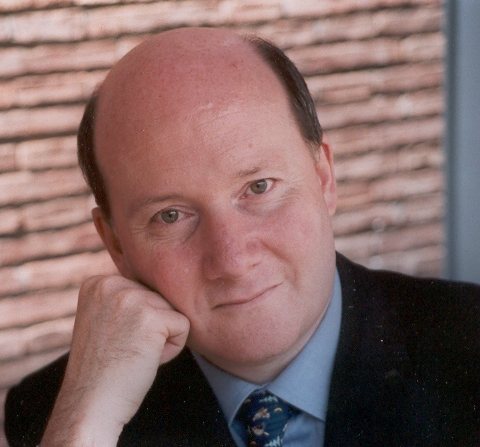

Field file 026
Massimo Introvigne
ACTIVE — THE MOST EFFECTIVE OPPONENT OF THE INSTRUMENT THIS DOSSIER IS BUILT ON, AND THE HALL CARDED HIM ON PURPOSE
A of The Contested Ground in The Anatomy of a Cult
Opened 2026-07-28 · verified 2026-07-28
A field file on a person in a public role, from the public record. Private lines (family, health, home, security, personal wealth) are kept at home and not shown.
I · Identity
- Full legal name
- Massimo Introvigne.
- Name in office ★
- Founder and Managing Director of CESNUR — the Center for Studies on New Religions — and editor of The Journal of CESNUR.
- Born
- 14 June 1955, Rome.
- Age
- 71.
- The distinction ★
- ★ He is the most effective opponent of the instrument Dossier XXI is built on, and the hall carded him at Ace rank deliberately. His school holds that "brainwashing" and "mind control" are pseudoscientific — a position reported as matching nearly all scholars of new religious movements and echoed by the USCIRF.
- Religion ★
- Roman Catholic, and openly so. ⚠︎ Recorded because it is materially relevant: he is not a neutral secular observer of religion but a committed religious man who studies other religions, and his critics treat that as significant.
II · The Likeness & the Ground
- Places of operation ★
- Rome for the formation, Turin for the law and for CESNUR, Vienna for the OSCE year. ★ Note the shape against the A♠ of this deck: Hassan's map is a recruitment, a crash and a rescue; Introvigne's is a university, a law firm and an intergovernmental body. Two entirely different routes to the same argument, and the difference explains much of the heat.
- Rome — born, and the Gregorian1955, BA 1975
Born 14 June 1955 in Rome. B.A. in Philosophy from the Pontifical Gregorian University, 1975 — a Roman Catholic formation, in the Jesuit university, and he has never concealed it. - Turin — the law degree and the practice1979–
Dr. Jur., University of Turin, 1979. Worked at the law firm Jacobacci e Associati as an intellectual property attorney specialising in domain names. ⚠︎ His professional training is LAW, not sociology of religion — a fact his critics press and this file records neutrally. CESNUR was established at Turin in 1988. - Vienna — the OSCE2011
From 5 January to 31 December 2011 he served as the OSCE's Representative on combating racism, xenophobia and discrimination, with a special focus on discrimination against Christians and members of other religions. An intergovernmental appointment — real, if brief, institutional standing.
- Rome — born, and the Gregorian1955, BA 1975
III · The Office
- Held since ★
- 1988 — CESNUR was established that year by Introvigne, Jean-François Mayer and Ernesto Zucchini. Thirty-eight years.
- What CESNUR is
- An international network of scholars studying new religious movements, with a substantial publishing operation and an annual conference. Its position is that new religions should be described as religions rather than diagnosed as pathologies.
- The journal ★
- Editor of The Journal of CESNUR, open access. ⚠︎ The March–April 2026 issue carried the critique of Steven Hassan and the BITE Model; the July–August 2026 issue carried work on how brainwashing narratives are re-engineered into legal and political tools, with case studies of moral panics and police raids.
- Term
- None. Founder and managing director of an organisation he created.
- Seat
- Turin, Italy.
- The OSCE year ★
- 5 January – 31 December 2011, Representative on combating racism, xenophobia and discrimination with a special focus on discrimination against Christians and members of other religions. The one formal intergovernmental office on this card.
- The day job ★
- Intellectual property attorney at Jacobacci e Associati, specialising in domain names. ⚠︎ Recorded plainly: the leading academic critic of the anti-cult field came to it as a lawyer and an independent scholar rather than through a university chair in religious studies.
- Alleanza Cattolica ★
- ⚠︎ ★ He joined the conservative Catholic organisation Alleanza Cattolica in 1972 and served as its VICE-PRESIDENT from 2008 to 2016. This is the single most contested fact on the card and the file states it rather than burying it: the scholar who says anti-cultists are ideologically motivated held office in a conservative Catholic movement for eight of the years he was making that argument.
IV · The Power
- Real jurisdiction ★
- NONE. No church office, no university chair asserted, no state authority since 2011.
- Definitional power ★
- ★ Very large, and this is the whole card. The scholarly consensus on new religious movements runs his way — the rejection of "brainwashing" as pseudoscience is reported as matching nearly all scholars in that field. He did not merely join that consensus; through CESNUR and its journal he has spent thirty-eight years building the infrastructure that carries it.
- Publishing power
- Author of dozens of books and articles in the sociology of religion, and main author of the Enciclopedia delle religioni in Italia. Editor of an open-access journal that publishes continuously.
- The 2026 strike ★
- ⚠︎ ★ The March 2026 critique of Hassan and the BITE Model is the most consequential single act on this card in years — a direct, named attack on the field's most widely used instrument, in print, from its most credentialed opponent.
- International reach partial
- The OSCE appointment in 2011, and sustained work on religious persecution — including of Christians and of minority religions in China.
- Where the power is checked ★
- ⚠︎ ★ By scholars, not by activists. Stephen A. Kent and Raffaella Di Marzio have argued that CESNUR's representation of the brainwashing controversy is "one-sided, polemical and sometimes without scholarly value." The check on this card comes from inside the academy, which is why Dossier XXI calls the fight three-cornered.
- What he cannot do ★
- ⚠︎ He cannot make the case studies go away. Jonestown, Waco, Heaven's Gate, Aum Shinrikyo and the NXIVM convictions are not moral panics; they are corpses and criminal verdicts, and any account of new religions has to explain them. Dossier XXI's Field D holds that his strong case is about SELECTION and method, and that it is weakest exactly here.
V · Formation
- First degree ★
- B.A. in Philosophy, Pontifical Gregorian University, Rome, 1975. A Jesuit institution.
- Law degree
- Dr. Jur., University of Turin, 1979.
- Professional formation ★
- Intellectual property law at Jacobacci e Associati, specialising in domain names. ⚠︎ A lawyer's training shows in the work: the arguments are adversarial, evidentiary and concerned with burden of proof — which is a genuine strength when the opposing claim is weakly evidenced, and a genuine limitation when the question is clinical rather than forensic.
- Religious formation ★
- Roman Catholic. Joined Alleanza Cattolica in 1972 — at about seventeen — and remained through a vice-presidency ending in 2016. Forty-four years of continuous association.
- Founding CESNUR
- 1988, with Jean-François Mayer and Ernesto Zucchini. He was thirty-three.
- Scholarly output
- Dozens of books and articles; principal author of the Enciclopedia delle religioni in Italia. Whatever one concludes about the position, the volume of primary descriptive work on Italian religion is not in dispute.
- What the formation implies ★
- ★ He is an independent scholar and a practising lawyer rather than a career academic — which is simultaneously the source of his freedom to build CESNUR and the basis of the charge that CESNUR is an advocacy network wearing scholarly dress. Both readings follow from the same biography.
- Languages and range partial
- Works across Italian, English and French sources, and on movements from Mormonism to Chinese new religions. The breadth is real and is part of why the network functions.
VI · The Ties
- Who founded it with him
- Jean-François Mayer and Ernesto Zucchini, 1988.
- Who he opposes ★
- ★ Steven Hassan (A♠ of this deck) by name since March 2026, and the wider cultic-studies field including ICSA. The two Aces of this deck are in open, published, current disagreement and the hall refuses to adjudicate.
- Who opposes him ★
- ⚠︎ Stephen A. Kent (K♦) and Raffaella Di Marzio (Q♦) of this same suit — carded in his own suit deliberately, because a deck that showed only his side of the academic argument would be lying by omission.
VII · Doctrine & Position
- The core claim ★
- ★ That "brainwashing" and "mind control" are pseudoscientific concepts, and that the framework built on them manufactures moral panics which end in police raids and criminalised religious minorities.
- The methodological claim ★
- That new religious movements should be studied and described as religions, using the same methods applied to old ones — and that a discipline which diagnoses the small and new while describing the large and old is not doing sociology. ★ Dossier XXI concedes this point and adopts an ordering rule because of it.
- On the BITE Model ★
- ⚠︎ Critiqued by name in The Journal of CESNUR, March 2026. The broader charge in this school is unfalsifiability: axes broad enough to catch any committed religious community yield a positive result that carries no information.
- On apostate testimony ★
- The standing methodological objection his school presses: former members are interested witnesses whose accounts are shaped after the fact. ⚠︎ Applied to the A♠ of this deck, this is the central charge — and it is a real objection in the sociology of religion, not merely a defensive one.
- Who echoes him ★
- The USCIRF has criticised anti-cult ideology as resting on "pseudoscientific concepts like 'brainwashing' and 'mind control'", and the position is reported as matching nearly all scholars of new religious movements. He is not an outlier; on this question he is closer to the consensus than his opponents are.
- Where the position is weakest ★
- ⚠︎ ★ The dead. A framework in which alarm about a religious group is treated as moral panic has to account for Jonestown, Waco, Heaven's Gate, Aum Shinrikyo and the NXIVM convictions — outcomes that are not narratives but corpses and criminal verdicts. ★ Dossier XXI's Field D holds that his case is strongest on METHOD and SELECTION and weakest exactly here, and that Lalich's bounded choice and Stein's attachment mechanism describe the difference without relying on the discredited strong claim at all.
- THE MACHINE QUESTION ★
- NO POSITION ON RECORD. Nothing was found tying him or CESNUR to artificial intelligence or the 2026 AI-manipulation literature. ⚠︎ Recorded as an absence, and NOT as evidence of a view. ★ Worth noting as a genuine gap: if brainwashing narratives are moral panics, the arrival of AI-facilitated coercive control research is precisely the case his school would need to address, and it has not yet.
- Where he stands to our house ★
- ⚠︎ ★ He is the reason Dossier XXI carries a warranty card, and the reason Field E was run inward before the instrument was pointed at anything on queue shelf C. Our house's own standing rule — that a missing datum must never default into a positive claim — is his argument in our vocabulary. He should be read as a corrective, not an enemy.
VIII · The Sword & the State
- Civil power ★
- None currently. Held one formal intergovernmental appointment: OSCE Representative, 5 January – 31 December 2011.
- The state question he presses ★
- ★ That anti-cult frameworks become state instruments — his journal's 2026 work documents how brainwashing narratives are re-engineered into legal and political tools, with case studies of moral panics, apostate testimony, media sensationalism and police raids criminalising practices.
- The alignment with Dossier XIX ★
- ★ His argument and Thomas Helwys's are structurally the same argument four centuries apart — that the magistrate must not be handed a tool for suppressing a religion it finds distasteful. A house that takes Dossier XIX's Field A seriously has to take this card seriously too.
- The counter-pressure ★
- ⚠︎ The opposite risk is equally real: bodies that do serious harm to their members benefit from a framework in which no harm can be named. Field D holds both concerns open.
- Exposure
- Sustained scholarly criticism, including the charge that his network's output is polemical. No legal or physical exposure identified.
IX · Conflict & Controversy
- The Alleanza Cattolica question ★
- ⚠︎ ★ The central controversy attaching to him. Member since 1972, vice-president 2008–2016 of a conservative Catholic organisation, while arguing that the anti-cult movement is ideologically driven. His critics read this as a conflict of interest; his defenders read it as an openly declared commitment that does not invalidate evidence. The file states the fact and declines to rule.
- The Kent and Di Marzio critique ★
- ⚠︎ That CESNUR's representation of the brainwashing controversy is "one-sided, polemical and sometimes without scholarly value." From scholars, not activists.
- The credentials question partial
- ⚠︎ He is a lawyer by professional training and an independent scholar rather than the holder of a university chair in religious studies. Recorded neutrally: it is pressed against him, and it did not prevent an OSCE appointment or a body of primary descriptive work.
- The unanswered case ★
- ⚠︎ The strongest thing against the position is not a person but a list. Jonestown, Waco, Heaven's Gate, Aum Shinrikyo, the NXIVM convictions. A framework that treats all alarm as moral panic has to account for these, and Dossier XXI's Field D holds that his school's account of them is the weakest part of the case.
X · The Standing
- Institutional weight
- Moderate and self-built. CESNUR is his own creation, thirty-eight years old, with a continuously publishing journal.
- Academic weight
- ★ High on this question — his position is reported as matching nearly all scholars of new religious movements, and is echoed by the USCIRF.
- Practical weight ★
- ⚠︎ Low compared to the A♠. Families in crisis do not reach for The Journal of CESNUR. The asymmetry between the two Aces is exact and inverted: he holds the academic ground, Hassan holds the practical ground, and neither holds both.
XI · The File
- Why the Ace ★
- ★ Because a hall that only carded the instrument's builders would be running propaganda, and this hall would rather be trusted than agreed with. He holds the Ace of the suit that says the instrument may not work. Rank here measures the weight of the objection, and on the academic ground his objection is heavier than the instrument it opposes.
- Cross-references
- Dossier XXI, Field D (the brainwashing wars) and Section IX (the case against the instrument, stated at full strength). Set directly against [[steven-hassan]]. ★ And read beside Dossier XIX's Field A — [[amanda-tyler]] and Helwys are making his argument in a different century, that the state must not be handed a tool for suppressing a religion it dislikes.
- The one thing to know ★
- ★ This hall carded its own instrument's chief opponent at Ace rank, and the reason is a rule: a contested instrument must never be presented as a settled one. If Dossier XXI is ever used to pronounce a verdict over a group, this card is the one that should stop the hand. That is what it is for.
XII · The Timeline
- 1975 · philosophy degree
- Completed a philosophy baccalaureate at the Pontifical Gregorian University, according to his CESNUR biography. Timeline checked 2026-09-23. Source. Other sections retain their original verification dates.
- 1986 · intellectual-property work
- Became a partner at Jacobacci & Partners.
- 1988 · CESNUR
- Co-founded the Center for Studies on New Religions.
- 1999 · religion and public institutions
- The biography records participation in an OSCE religious-freedom meeting and a jointly organized seminar on law enforcement and religious violence.
XIII · The House Reading
- Place in the landscape
- Introvigne works where scholarship about minority religions meets public controversy and legal questions. Read his arguments as identifiable contributions to a debate, rather than as the final institutional judgment on a group. House analysis written 2026-09-23; these applications are inferences, not the subject's statements about this house.
- What could help this house
- Require a specific allegation and supporting evidence instead of relying on an unpopular label. Minority status or unusual beliefs alone do not establish harmful conduct.
- What could hurt this house
- A concern for religious freedom can be applied so broadly that particular reports of harm receive too little scrutiny. Conversely, concern about harm can become a reason to disregard freedom of belief. Test both claims against the same evidence.
- Boundary and next evidence
- The career dates come from CESNUR's own biography. For a contested case, compare his argument with the records it cites and with the strongest documented criticism; record where evidence ends and interpretation begins.
Sources
- Wikipedia — Massimo Introvigne (born 14 June 1955 Rome; Gregorian BA Philosophy 1975; Dr. Jur. Turin 1979; Jacobacci e Associati IP attorney; CESNUR founded 1988 with Mayer and Zucchini; Alleanza Cattolica from 1972, vice-president 2008–2016; OSCE representative 5 Jan – 31 Dec 2011; retrieved 28 July 2026)
- Wikipedia — CESNUR (founding, purpose, and the criticism from Stephen A. Kent and Raffaella Di Marzio that CESNUR's representation is one-sided and polemical; retrieved 28 July 2026)
- The Journal of CESNUR 10:2 (March–April 2026) — Introvigne, 'Steven Hassan and the BITE Model'
- The Journal of CESNUR 10:4 (July–August 2026) — full issue, including Marin on anti-cultism and the revival of 'brainwashing' narratives as legal and political tools
- CESNUR — Center for Studies on New Religions, brainwashing texts archive
- Timeline source checked 2026-09-23; house applications are editorial analysis